KR
KR EN
EN ES
ES RU
RU JP
JP VN
VN
Proverb
Content
As the scholar of the Joseon Dynasty, Jo Ik (1579?1655), mentioned, consistent effort leads to great results. The proverb that conveys this meaning is “티끌 모아 태산”, which means "Gathering small things can make a mountain." On the other hand, there are times when no matter how much effort is put in, there is no result. This situation is expressed with the proverb “밑 빠진 독에 물 붓기”, which means "Pouring water into a bottomless jar."
1. Pouring water into a bottomless jar
This proverb means that no matter how much water is poured into a jar with a hole in the bottom, it can never be filled. It refers to a situation where, despite putting in a lot of effort, the result is pointless or futile.
Similar Expressions
• Fixing the barn after the cow has been lost: This means trying to fix the barn after the cow has been stolen, indicating that once something goes wrong, any actions afterward are useless.
• A completely wasted effort: This expression refers to a futile effort or wasted effort. The phrase comes from a story during the Imjin War when the king ate a fish called "muk" and thought it tasted good, naming it "eun-eo." After the war, when the fish was served again in the palace, it tasted bad, leading the king to say, "Call it 'doru-muk' instead." Over time, the expression became "maljjang dorumuk," meaning something that results in no gain.
• To try to hit a rock with an egg: This refers to attempting something that cannot be won or achieved, like trying to break a rock with an egg. It indicates a situation where, no matter how much effort is put in, it's almost impossible to achieve the desired outcome. It can also be expressed as “hitting a rock with your head”.
2. Gathering small things can make a mountain
This proverb means that even the smallest things, when gathered together, can eventually form a large mass. Just as tiny dust particles come together to form a mountain, it emphasizes the importance of consistent effort. A similar analogy can be found in Jo Ik's teaching, which says, "Just as a single drop of water fills a jar," conveying a similar idea of accumulating small efforts to achieve something great.
Similar Expressions:
• A journey of a thousand miles begins with a single step: This expression means that the start of any endeavor is important, and even big and difficult tasks should be approached step by step from the beginning.
• Dig one well thoroughly: It means that in order to succeed, you must complete one task before moving on to another, and it suggests being cautious of starting too many tasks or frequently changing what you were working on.
• Seven falls, eight rises: It means "falling seven times and getting up eight," which means even if you fail multiple times, you should not give up and continue to make consistent efforts.
Proverbs not only allow us to learn wisdom for life, but using the appropriate proverb for different situations can add fun to speech and emphasize meaning. Practice various ways to express ourselves using proverbs.
Related Image
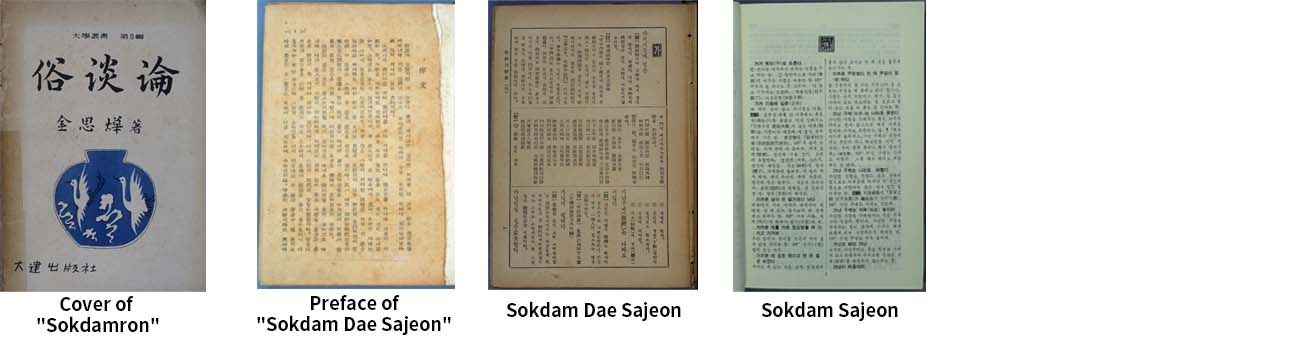
Source: Theory of Proverbs (Cover of "Sokdamron"), Encyclopedia of Korean National Culture
Source: Great Dictionary of Proverbs (Preface of “Sokdam Dae Sajeon”), Encyclopedia of Korean National Culture
Source: Great Dictionary of Proverbs (Sokdam Dae Sajeon), Encyclopedia of Korean National Culture
Source: Dictionary of Proverbs (Sokdam Sajeon), Encyclopedia of Korean National Culture